
Curriculum Design
Three stages mapped onto NEP 2020, a four-step lesson design used in every subject, and enrichment that is timetabled rather than optional.
Bhaktivedanta Model School follows the CBSE curriculum, which provides a holistic and student-centred approach to education. The curriculum is aligned with the National Education Policy (NEP) and ensures the overall intellectual, social and emotional growth of students.
Three stages
The school’s own names for its stages — seed, sapling and tree — map directly onto the NEP 2020 structure.
Beej
Pre-Primary
Nursery – Sr. KG
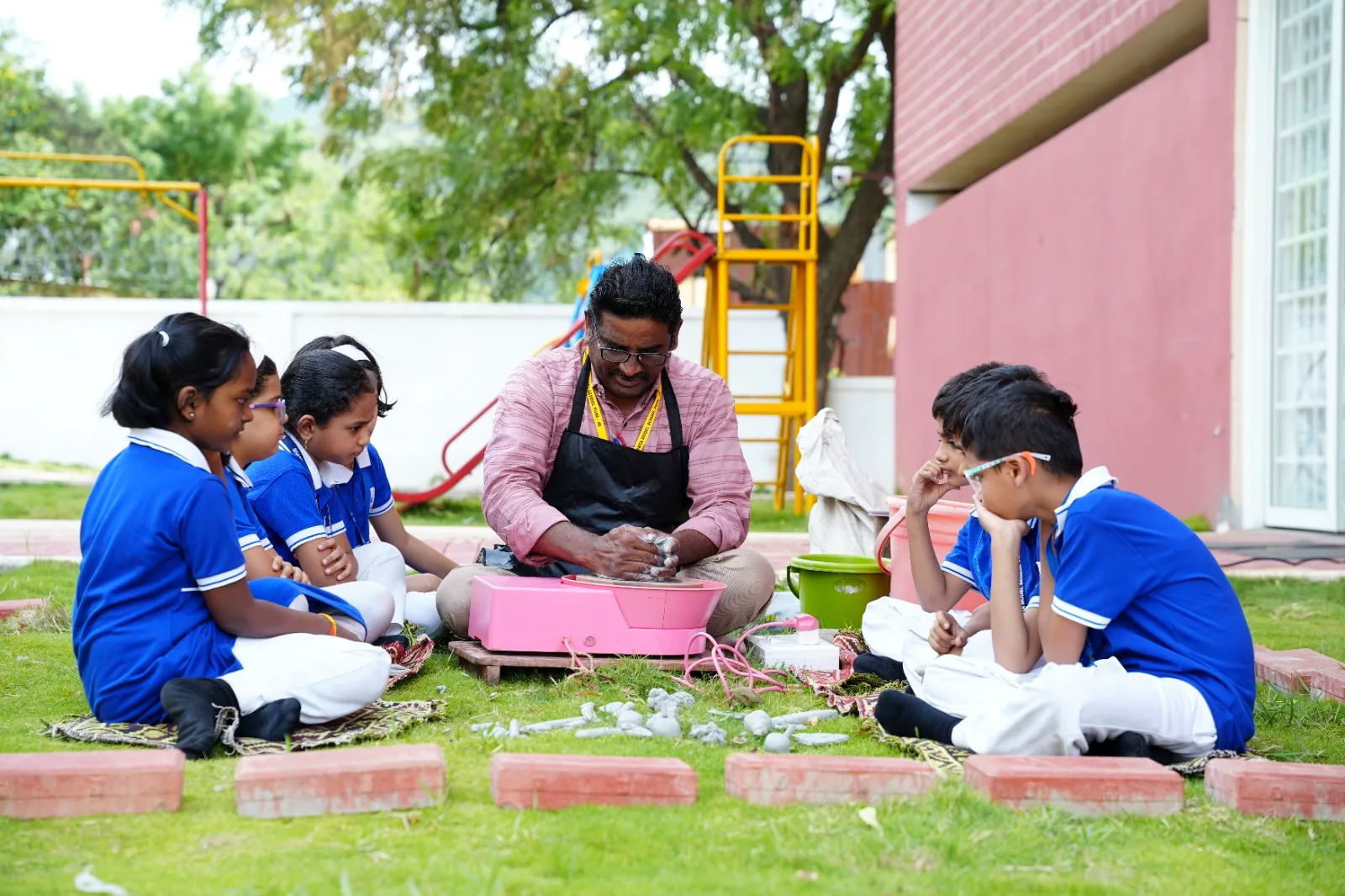
Foundational skills — language development, early numeracy and motor skills — through play-based learning, with an emphasis on creativity, communication and social-emotional growth.
NEP Foundational Stage
Paudha
Primary
Grades I – V
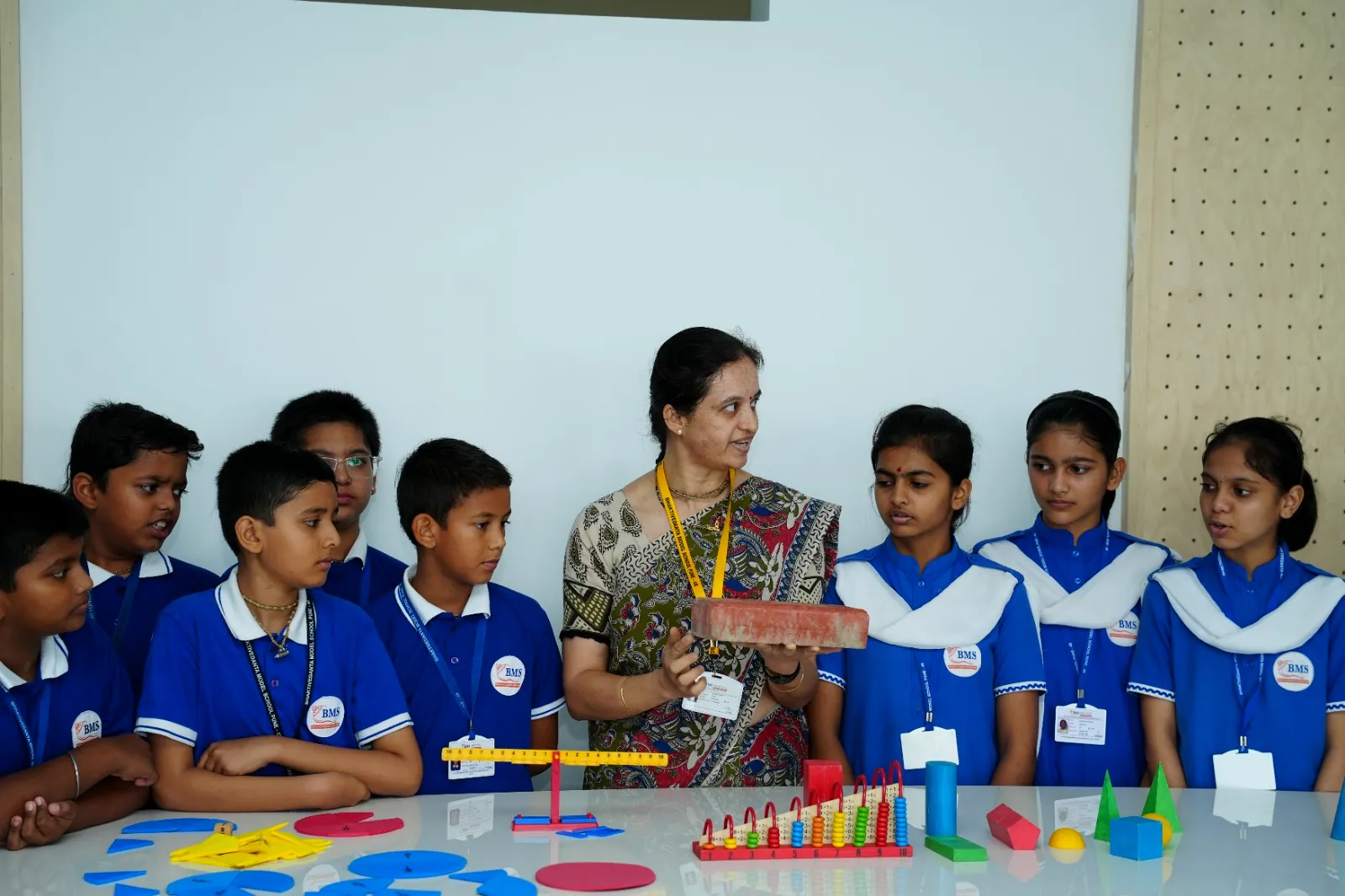
English, Hindi, Sanskrit and Marathi for multilingual proficiency, and a strong foundation in Mathematics, EVS, Science and Computers. Activity-based methods develop curiosity and critical thinking, with abacus, art, music, dance and sport integrated into the curriculum.
NEP Preparatory Stage
Ped
Middle & Secondary
Grades VI – above
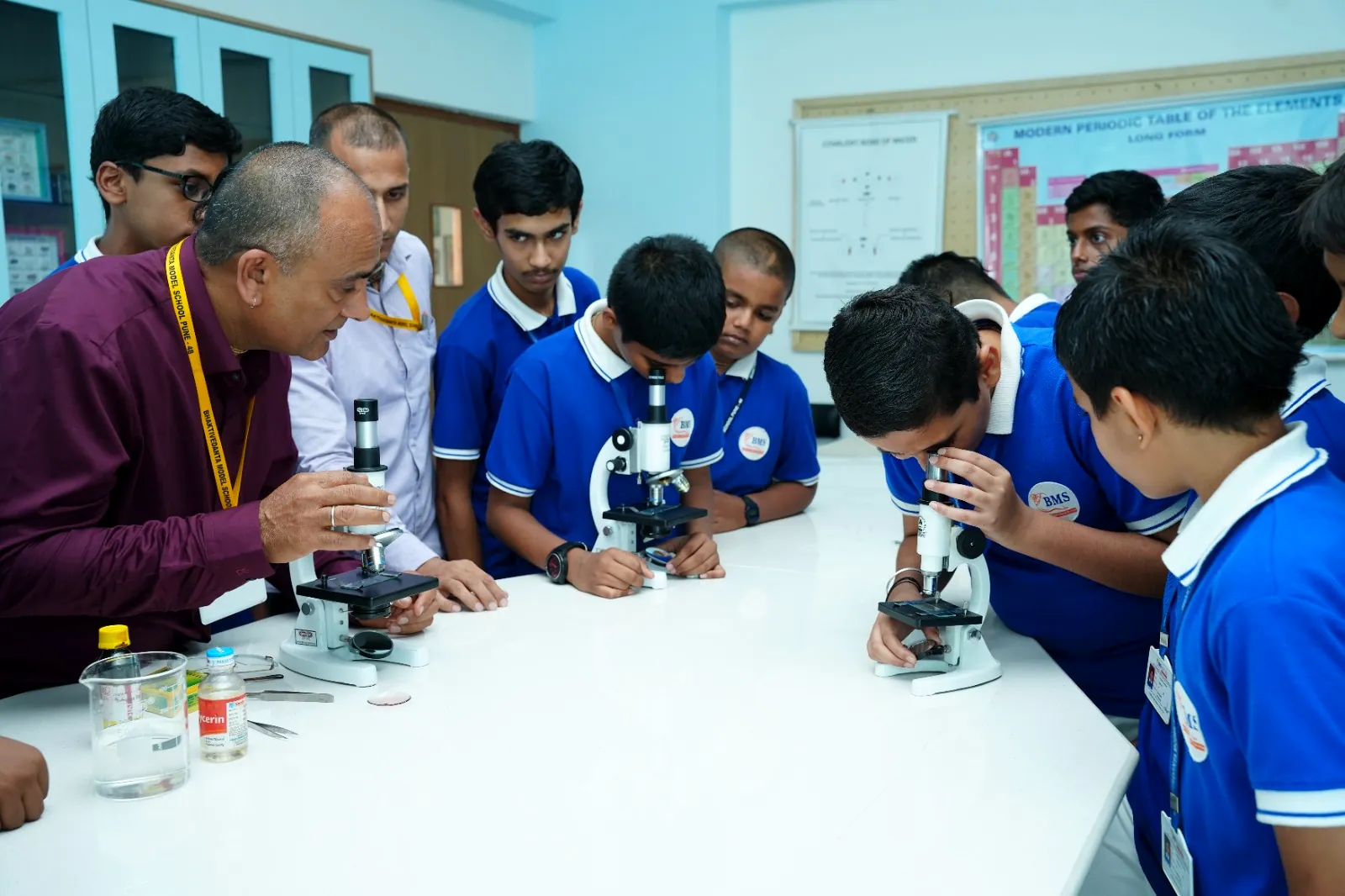
Conceptual knowledge is expanded through Mathematics, Science and Social Studies alongside computational skills and AI, with robotics, abacus and the arts integrated. Students take part in STEM activities, debates and projects, and move on to board-examination readiness and leadership in the house system.
NEP Middle & Secondary
Skill-based subjects
In addition to core subjects, we offer CBSE-approved skill-based subjects at every level to enhance employability and practical knowledge. These include Coding & Artificial Intelligence, Financial Literacy, and Communication Skills.
How every unit is built
-
Experience
The child meets the idea first — through an activity, a material, a demonstration or a field visit.
-
Conceptualise
It is named and defined precisely, and connected to what the child already knows.
-
Analyse
It is tested, questioned and reasoned through.
-
Apply
It is used in an unfamiliar situation — application, not recall.
Scheme of studies
- Board
- CBSE curriculum and NCERT prescribed texts
- Medium
- English
- Languages
- Hindi, Marathi and Sanskrit, in line with the three-language formula
- Core subjects
- English, Mathematics, Science, Social Science, Computer Science
- Compulsory co-scholastic
- Art & craft, music, dance, physical education, yoga
- Division size
- 25 in pre-primary, 35 in primary
- Week
- Five-day week, Monday to Friday
The frameworks we teach to
- CBSE curriculum documents and the scheme of studies for each grade
- NEP 2020 stage structure and its emphasis on foundational literacy and numeracy
- The National Curriculum Framework, including its Panchakosha view of development — physical, vital, emotional, intellectual and inner wellbeing
- Bharatiya Shiksha Paddhati: Indian knowledge traditions taught as academic content